
You walk out to your car in the morning and notice a puddle on the driveway. It might be a small spot or a growing stain, and either way it raises the same question: how bad is it? Fluid leaks are one of the most common reasons Atlanta drivers call for help, and the color of what is dripping can tell you a great deal about where it is coming from and how fast you need to act.
This guide walks through the colors you are most likely to see, what each one usually means, and when a leak is a minor annoyance versus a reason to stop driving right now.
How to Check a Leak the Right Way
Before you start guessing, collect a clean sample. Slide a sheet of white cardboard or a few white paper towels under the car overnight. In the morning, you will see the true color, the thickness, and the location of the drip. Note where the spot sits under the vehicle, since the position is a clue too. Fluid near the front often points to the engine, coolant system, or power steering. Fluid near the middle can mean the transmission. Fluid near the rear may come from the differential or the fuel system.
Smell matters as well. Sweet, oily, burnt, or sharp chemical odors can narrow things down quickly.
Clear and Watery
A clear, thin puddle that looks like water is often exactly that. When you run the air conditioning, condensation drips from the evaporator drain, usually near the front passenger side. This is normal, especially in Atlanta's humid summers, and it is nothing to worry about.
Be careful, though. Two serious fluids can also look nearly clear. Brake fluid starts out clear to light yellow and feels slick between your fingers. Gasoline is also clear, but it has an unmistakable smell and evaporates quickly. If a clear fluid does not smell like water and does not feel like water, treat it as a potential brake or fuel leak.
Green, Orange, Pink, or Bright Blue
Bright, vivid colors usually mean coolant, also called antifreeze. Different manufacturers use different dyes, so the color can be green, orange, pink, yellow, or blue. Coolant often has a sweet smell and feels slightly slippery.
A coolant leak is serious. Your engine depends on coolant to stay at a safe temperature, and Atlanta summers leave little margin for error. A small leak can turn into overheating, which can warp the cylinder head or damage the engine. If the temperature gauge climbs, pull over and shut the engine off. Do not open the radiator cap while the engine is hot. The cause may be a worn hose, a failing radiator, a bad water pump, or a loose clamp.
One exception: windshield washer fluid is often bright blue as well. It is thin, smells like window cleaner, and usually drips near the front corners. That one is harmless, though you will want to fix the reservoir or lines so you are not left without washer fluid.
Light Brown to Dark Brown or Black
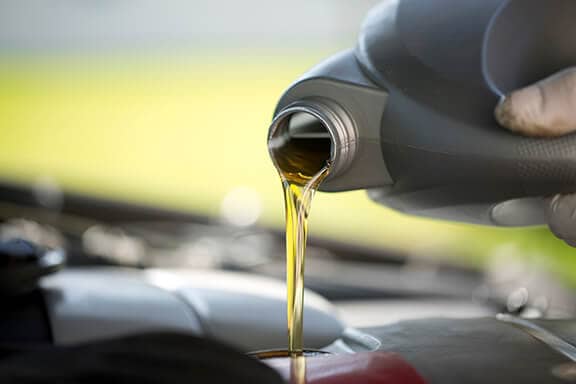
Brown or black fluid with a slick, oily feel is typically engine oil. Fresh oil looks amber, and it darkens as it ages. A small, occasional drip may come from a worn valve cover gasket or oil pan gasket. A larger leak can come from a failed oil filter, a bad drain plug seal, or a rear main seal.
Low oil is dangerous. Engines run on a thin film of oil, and when the level drops too far they can fail quickly. Check the dipstick, top off if needed, and have the source of the leak diagnosed. If the oil pressure light comes on, stop driving immediately.
Very dark, thick, and strong smelling fluid near the rear axle may be differential or gear oil, which often has a sharp, unpleasant odor. Old brake fluid can also turn brown, so a brownish drip near a wheel deserves a prompt inspection.
Red or Reddish Brown
Red fluid usually points to automatic transmission fluid or power steering fluid, both of which are often dyed red. Transmission fluid is thin and oily and may smell slightly sweet or burnt as it ages. A leak near the middle of the car suggests the transmission. A leak near the front, especially with whining or stiff steering, suggests the power steering system.
Transmission repairs are among the most expensive a driver can face, and running low on fluid can cause overheating and permanent damage. If you see red fluid, do not wait. Early repairs, such as replacing a seal, pan gasket, or cooler line, are often far cheaper than a rebuilt transmission.
Yellow to Light Brown and Slippery
A slick, thin fluid in the yellow to light brown range, found near a wheel or under the brake pedal area, is likely brake fluid. Brake leaks are a top safety concern. If you have a soft or sinking brake pedal, or the pedal goes closer to the floor than usual, do not drive the car. The braking system relies on hydraulic pressure, and a leak can cause a sudden loss of stopping power.
Atlanta's traffic already puts heavy stress on brakes, which we explain in our article on why Atlanta traffic wears out brakes faster than you'd think. A leak on top of that wear is a combination you should never ignore.
Gasoline or a Strong Fuel Smell
A fuel leak is the most urgent of all. Gasoline is clear to slightly yellow and has a strong, easily recognized smell. Because it is flammable, even a small leak is a fire hazard. Do not start the engine, avoid any sparks or open flames, and have the vehicle inspected before it is driven again. Leaks can come from a fuel line, a loose fitting, an injector, or the tank itself.
Quick Reference by Urgency
- Stop driving now: gasoline, brake fluid, or any leak with an overheating engine or low oil pressure warning
- Get it checked within days: coolant, transmission fluid, power steering fluid, or a steady oil drip
- Monitor and plan service: a slow, occasional oil seep with a normal dipstick reading
- Usually normal: clear water from the air conditioner
What You Should Not Do
Avoid the temptation to simply top off the fluid and move on. A leak does not fix itself, and it often gets worse over time. Stop leak additives can clog small passages and cause new problems, so they are rarely a good idea. Also avoid driving long distances with a leak you cannot identify. If the car refuses to start after a fluid loss, our guide on the top 10 reasons your car won't start and how to get back on the road can help you rule out other causes.
Why a Mobile Mechanic Is Ideal for Leaks
Diagnosing a leak usually means getting under the car, cleaning the area, and tracing the fluid back to its source. A mobile mechanic can do that at your home or workplace, so you do not have to risk driving a leaking vehicle across the city. Many common fixes, such as replacing a hose, a gasket, or a seal, can be completed on the spot.
Do Not Wait on a Puddle
Color is the fastest clue you have. Bright colors suggest coolant, brown and black suggest oil, red points to transmission or steering, slippery yellow suggests brakes, and a strong smell of gas means stop immediately.
To learn more about our services, visit our homepage. If you spotted a puddle under your car, reach out through our contact us page and we will come to you anywhere in the Atlanta area.