
Anyone who has spent time on I 285, the Downtown Connector, or GA 400 during rush hour knows that Atlanta traffic is not just an inconvenience. It is one of the most consistent sources of vehicle wear that drivers here deal with, and brakes almost always take the biggest hit. A lot of drivers assume brake wear comes mostly from age or mileage, but in a city built around constant stop and go congestion, the real story is a little more complicated than that.
Stop And Go Driving Is Brutal On Brake Pads
Every time you press the brake pedal, kinetic energy from your moving vehicle gets converted into heat through friction between your brake pads and rotors. On the open highway, you brake occasionally and your brake components get plenty of time to cool down between uses. In heavy Atlanta traffic, that pattern disappears entirely. You are braking every few seconds, sometimes barely getting back up to speed before you need to slow down again. That repeated cycle generates far more heat and far more friction wear than the same number of miles driven at a steady highway speed.
Traffic engineers and mechanics alike have long recognized that stop and go conditions can wear down brake pads two to three times faster than consistent highway driving. For Atlanta commuters who spend an hour or more in traffic each way, that adds up to a significant amount of extra wear over the course of a single year, let alone the lifetime of the vehicle.
Heat Buildup Changes How Your Brakes Perform
It is not just about faster wear. Repeated heavy braking in dense traffic also raises the temperature of your rotors and pads well beyond what they experience during normal highway use. When brake components stay hot for extended periods, especially during a long crawl through downtown congestion, drivers sometimes notice reduced stopping power, a spongy feeling in the pedal, or a faint burning smell. This is often referred to as brake fade, and while modern brake systems are built to handle a reasonable amount of heat, Atlanta’s traffic patterns push components toward that limit more often than most drivers realize.
Over time, this heat cycling can also affect the rotors themselves, causing warping or uneven wear that leads to vibration when braking. A rotor that has been repeatedly heated and cooled under heavy traffic conditions is more prone to this kind of damage than one used mostly on the open road.
The Sounds And Signs Your Brakes Are Telling You Something
Brake pads are designed with a small metal wear indicator that creates a high pitched squeal once the pad material gets thin enough to need attention. If you have started hearing that sound during your daily commute, it is not something to put off. This is your vehicle telling you the pads are approaching the end of their usable life, and continuing to drive on them will eventually allow metal to grind against metal, which is a much more expensive repair.
Grinding noises, a pulsing or vibrating sensation through the brake pedal, a car that pulls to one side when braking, or a brake pedal that feels softer or needs to travel further than usual before engaging are all signs worth taking seriously. In a city where you might brake hundreds of times during a single commute, these symptoms tend to show up sooner than drivers expect, and they rarely improve on their own.
Some drivers also notice their car struggling in other ways related to daily wear and tear, not just braking. If you have dealt with a car that hesitates to start after sitting in traffic or through a hot Georgia afternoon, our guide on the top 10 reasons your car won’t start and how to get back on the road covers many of the common causes and is worth a look if starting issues have been part of your recent frustrations as well.
How Often Atlanta Drivers Should Really Be Checking Brakes
Manufacturer recommendations for brake inspections are often based on average driving conditions, which assume a healthy mix of highway and city miles. Atlanta commuters, particularly those navigating the Perimeter or the Connector daily, do not fit that average. If your commute involves significant stop and go traffic, it makes sense to have your brakes checked more frequently than the standard interval suggests, ideally every six months rather than waiting for an annual service visit.
Brake fluid condition also deserves more attention than most drivers give it, especially in a city where brakes are worked this hard on a daily basis. Fluid absorbs moisture over time, and moisture lowers the boiling point of the fluid, which becomes a real concern when your brakes are already running hotter than average due to constant stop and go use. Fluid that has not been flushed in a couple of years can contribute to a spongy pedal feel even when the pads themselves are still in reasonable shape, so it is worth having it checked alongside your pads and rotors rather than treating it as a separate issue.
A simple visual inspection can often catch a pad that is getting thin well before it starts making noise, which means a cheaper and simpler repair rather than waiting for a full brake job that includes rotor replacement. Catching wear early is almost always the difference between a routine pad swap and a much larger bill.
Why A Mobile Mechanic Fits Atlanta’s Driving Reality
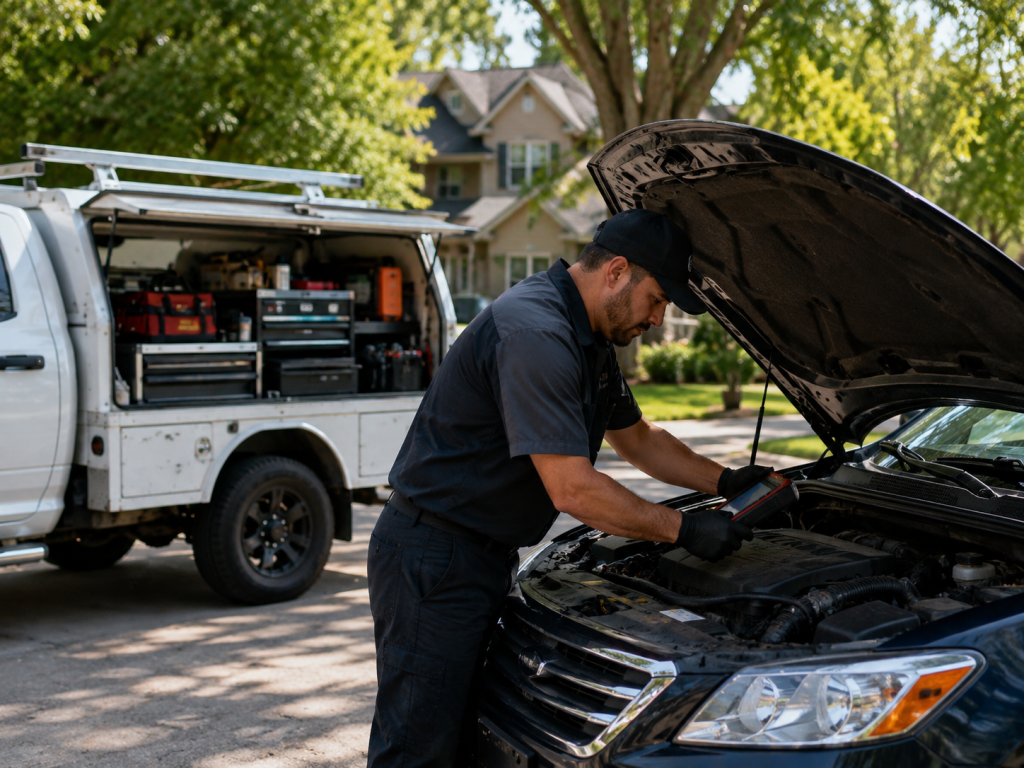
Given how much time Atlanta drivers already lose to traffic, adding a trip to a repair shop and a wait in a lobby is not exactly appealing. This is one of the clearest reasons mobile mechanic service has become popular with commuters here. A technician can come to your home or office, inspect your brakes, and handle a pad replacement without you needing to burn an afternoon sitting in a waiting room after already spending the morning stuck in traffic.
We put together a detailed look at why mobile mechanics are better than traditional auto shops in Atlanta if you want a fuller picture of how the convenience and pricing compare, especially for routine maintenance items like brake pads that come up again and again for commuters in this city.
Do Not Wait For The Grinding Sound
Atlanta traffic is not going anywhere, and neither is the extra strain it puts on your brake system. Treating brake maintenance as a regular part of city driving, rather than something you deal with only after hearing a warning sound, will save you money and keep you safer on some of the busiest roads in the country. Given how much of your day may already be spent behind the wheel here, keeping ahead of brake wear is one of the simplest ways to avoid an unpleasant surprise during your commute.
If it has been a while since your brakes were inspected, or if you have noticed any of the warning signs covered here, do not wait for the problem to get worse. Visit our homepage to see the full range of services we offer, or head straight to our contact us page to schedule a mobile brake inspection at a time and place that works for you.
A quick check now is almost always cheaper, faster, and far less stressful than dealing with a brake failure during rush hour on the Connector.