
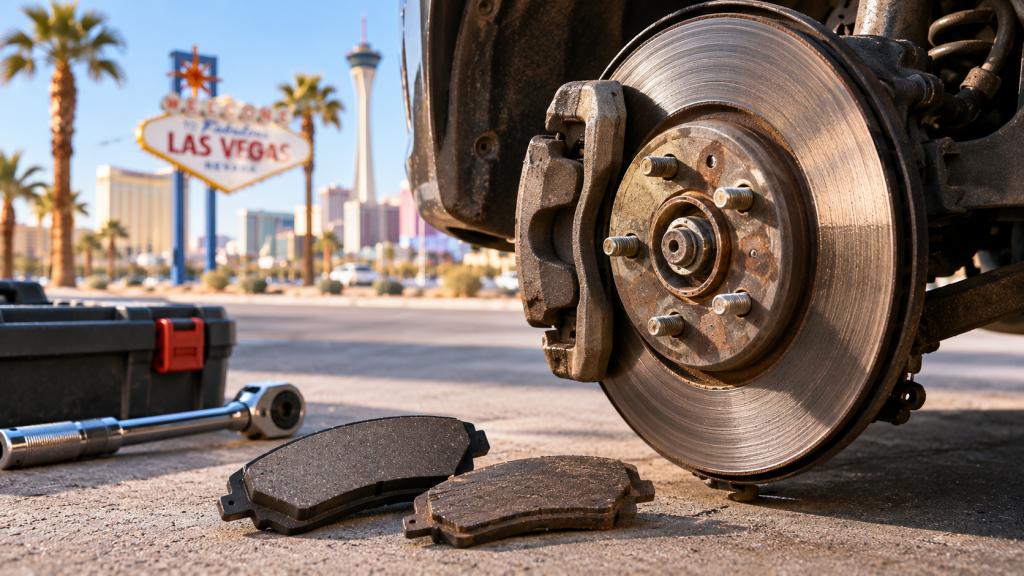
Your brakes talk to you. Long before they fail, they usually give you a series of hints: a faint squeal, a slight shudder, a pedal that feels a little different than it did last month. The trouble is that these signals are easy to dismiss, especially when you are busy and the car still stops. But brakes are the most important safety system on your vehicle, and in Las Vegas they work in some of the toughest conditions around, from triple digit heat to constant stop and go traffic on the Strip, the 215 and the busy surface streets. This guide covers the sounds and feelings that mean it is time for a brake inspection, what each one can mean and what to do next. If you are searching for brake repair in Las Vegas, this will help you recognize when it is time to act.
How Brakes Work in a Nutshell
Most cars use disc brakes on at least the front wheels. When you press the pedal, hydraulic pressure squeezes brake pads against a spinning rotor, and the friction slows the wheel. Some vehicles use drum brakes at the rear. Brake fluid transmits the force from the pedal, and lines, hoses, calipers and a power assist system complete the setup. Pads and shoes are designed to wear away gradually, and rotors and drums wear too. That is normal, which is why brakes need regular inspection and eventual service.
Why Las Vegas Is Hard on Brakes
Brakes turn motion into heat, and Las Vegas already has plenty of heat. Hot pavement and high air temperatures make it harder for brakes to shed heat, and stop and go traffic means frequent braking with little time to cool. Brake fluid can absorb moisture over time and degrade, and heat makes that worse. Dust and grit can also build up around brake parts. All of this means it is wise to pay attention to your brakes year round, and not wait for a problem to become obvious.
Sounds That Signal Trouble
High pitched squealing
Many brake pads include a small metal tab called a wear indicator. When the pads wear thin, the tab touches the rotor and makes a high pitched squeal. That is an early warning that service is due. Squealing can also come from dust, glazed pads or moisture, so a brief squeak does not always mean trouble. A squeal that is consistent, or that keeps coming back, is worth having inspected.
Grinding or growling
A harsh grinding sound is a stronger warning. It can mean the pads have worn down to the metal backing and the metal is now scraping against the rotor. Driving in this condition can damage the rotors and make the repair bigger. If you hear grinding when you brake, have the system inspected as soon as you can.
Clicking or rattling
Clicking or rattling sounds when you brake can point to loose hardware, worn parts or pads that are not seated properly. A noise that changes when you press the pedal is a clue that the brakes are involved.
Scraping that continues after you release the pedal
If you hear a scraping or dragging sound even when you are not braking, a caliper may be sticking or a part may be rubbing. This can cause overheating and uneven wear and should be checked soon.
Feelings That Signal Trouble
A soft or spongy pedal
If the pedal feels soft, goes down farther than usual or slowly sinks, there may be air or moisture in the lines, a fluid leak or another hydraulic problem. This affects your ability to stop. Do not wait on it. Have the car checked right away, and avoid driving it if the pedal feels unreliable.
A hard pedal
If you have to press much harder than usual, the power assist may not be working. Stopping can take longer, so have it inspected promptly.
Vibration or pulsing
If the steering wheel shakes or the pedal pulses when you brake, the rotors may be warped or unevenly worn, or something else in the brake or suspension system may need attention. Vibration only when braking is a strong sign the brakes are involved.
Pulling to one side
If the car drifts left or right when you brake, a caliper may be sticking, a hose may be failing or the pads may be wearing unevenly. Pulling can also come from tire or alignment issues, so a technician can sort out the cause.
Longer stopping distances
Sometimes the sign is subtle: the car just takes longer to stop than it used to. If you find yourself braking earlier or pressing harder, trust your instincts and get the system checked.
A pedal that feels different
Any change, such as a pedal that sits lower, higher or feels different under your foot, is worth mentioning to a technician. You know how your car normally feels better than anyone.
Signs You Can See or Smell
- A brake warning light. It can point to low brake fluid, a system problem or an engaged parking brake. Some cars also have a separate light for the anti lock system. Our guide to dashboard warning lights explained can help you understand what the lights on your dash mean, and your owner’s manual covers the specifics for your car.
- A burning smell after hard braking. This can mean overheated brakes. If you notice smoke or a persistent smell, pull over safely and let them cool.
- Fluid leaks. Brake fluid is usually clear to light brown and slippery. Fluid near the wheels or under the car, or a reservoir level that keeps dropping, points to a leak. This is serious.
- Thin pads. If you can see the pads through the wheel spokes and they look very thin, it is time for service.
- Dark dust or scoring. Heavy dust on the wheels is normal, but deep grooves or rust on the rotor surface can signal wear.
- Uneven wear. One wheel that looks dirtier than the others may have a braking issue.
Dashboard lights often show up alongside other problems, and ignoring them rarely makes things better. If you are tempted to put off a warning, our post on the real cost of ignoring a check engine light in Las Vegas explains why waiting can backfire.
Can You Keep Driving?
This depends on the symptom, but a good rule is not to take chances with brakes. A faint squeal that shows up now and then may give you time to schedule service soon. But grinding, a soft or sinking pedal, pulling, leaking fluid, smoke or a warning light are reasons to have the car inspected right away, and in some cases to stop driving it. If you are unsure whether it is safe, play it safe and call a professional.
What a Brake Inspection Includes
A thorough inspection looks at more than the pads. A technician will usually check:
- Brake pad or shoe thickness and condition.
- Rotors and drums for wear, scoring, warping or rust.
- Calipers and wheel cylinders for sticking or leaks.
- Brake lines and hoses for cracks, leaks or damage.
- Brake fluid level and condition.
- The parking brake.
- Warning lights and, if equipped, the anti lock system.
Based on what is found, the recommended service may range from replacing pads to resurfacing or replacing rotors, replacing a caliper or hose or flushing the fluid. A good technician will explain what is worn, what can wait and what needs attention now.
Habits That Help Brakes Last
- Look ahead and slow down gradually. Smooth braking is easier on the system than sudden stops.
- Leave more space. A longer following distance gives you time to brake gently.
- Do not ride the pedal. Constant light pressure creates heat and wear.
- Lighten the load. Extra weight means more work for the brakes.
- Keep up with brake fluid service as your owner’s manual recommends.
- Get regular inspections, especially before summer and before long trips.
- Listen and feel. Notice new sounds and changes in pedal feel, and act on them.
How a Mobile Mechanic Can Help
Brake trouble is not something you want to drive on, and a trip to a shop is not always convenient, especially in the heat. A mobile mechanic can come to your home or workplace to inspect the brakes, explain what is needed and handle many common brake repairs on site. That makes it easier to deal with a problem early, before it gets worse. Some brake work needs specialized equipment and may require a shop, and a good technician will be honest about what can be done where your car is parked.
Quick Brake Warning Checklist
- Squealing or squeaking that keeps returning.
- Grinding or growling when you brake.
- A soft, spongy or sinking pedal.
- A hard pedal or much more effort needed.
- Vibration or pulsing when stopping.
- The car pulling to one side.
- A brake or anti lock warning light.
- Burning smells, smoke or fluid leaks.
- Longer stopping distances.
If you notice any of these, do not wait for it to get worse. Brake service is one of the most important things you can do for your safety and for everyone sharing the road with you. To get your brakes inspected, visit our homepage to learn more, or contact us to schedule a visit.